


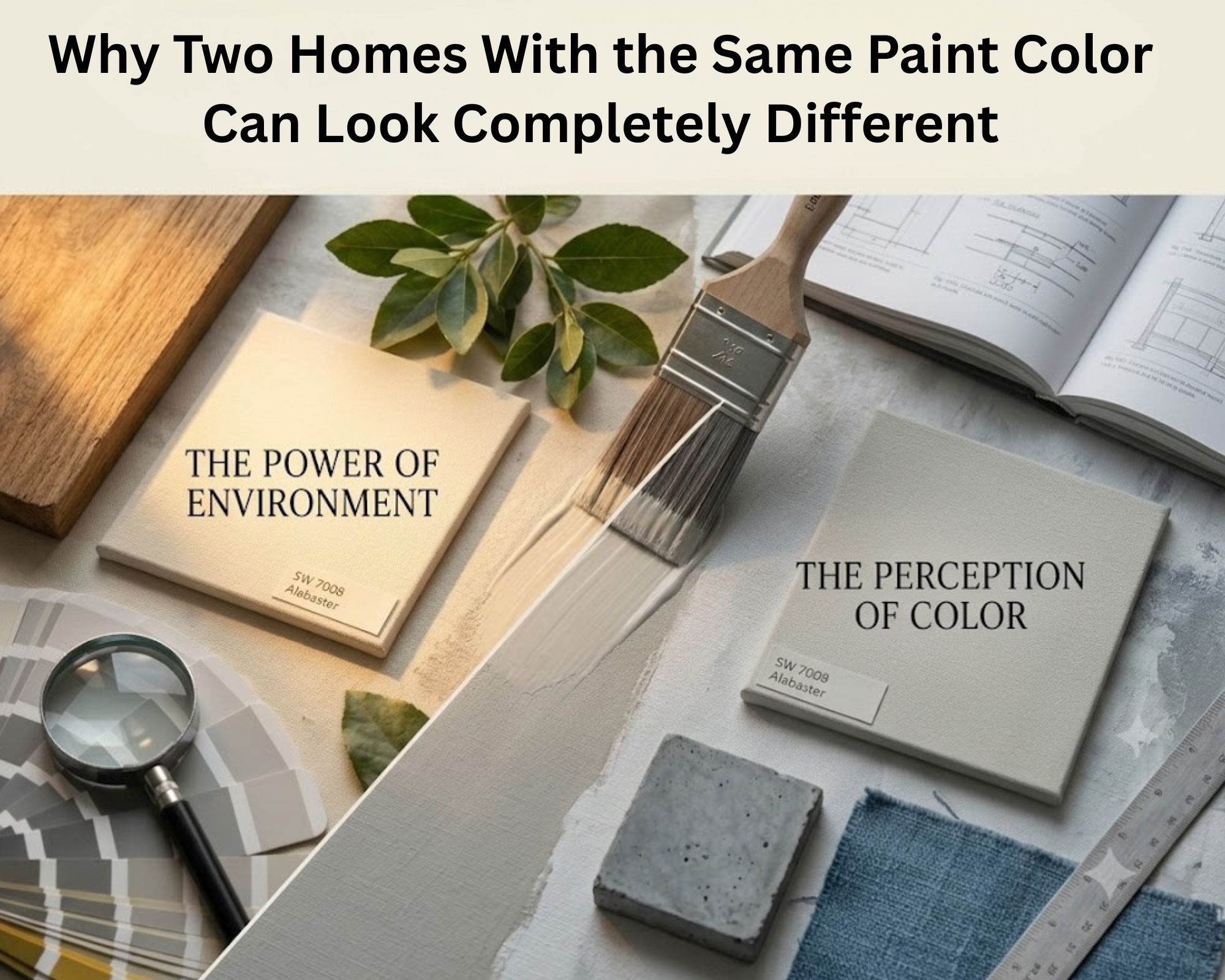
Have you ever loved a paint color in someone else’s home, only to find it looks completely different in your own? This is common because lighting, room size, flooring, furniture, and surrounding colors can all affect how paint appears.
Understanding these factors can help you choose the right color for your space. Professional painting services in Avon, CT can also help you select colors and finishes that work well with your home’s unique lighting and style.
The amount and direction of natural light can change how paint looks throughout the day. A room with large south-facing windows may receive strong, warm natural light, making some colors appear brighter and warmer. A north-facing room usually receives softer, cooler light, which can make the same paint color look more muted or slightly gray. Even rooms in the same house can look different because they may get different amounts of sunlight.
Light bulbs also influence how paint looks after sunset. Warm white bulbs can bring out yellow, beige, or warm undertones in a paint color. Cooler bulbs may make certain colors appear sharper or slightly blue. This is why a color that looks perfect during the afternoon may appear different when viewed under your home's lighting at night. Before making a final decision, look at paint samples in both natural and artificial light.
Paint colors do not work in isolation. The colors around them can influence how the walls are perceived. For example, a soft neutral may look warmer when surrounded by dark wood flooring and warm furniture. The same neutral could appear cooler in a room with white cabinets, gray flooring, and cool-toned furniture. Curtains, rugs, artwork, countertops, cabinets, and other finishes can all affect the overall appearance of a wall color.
The size and layout of a room can also make the same color feel different. A darker shade may create a cozy atmosphere in a small bedroom but feel more dramatic when used across a large open living area. A light color may make a compact room feel more open, while the same color in a large space may appear much brighter. Ceiling height, window size, and the amount of wall space can further change how the color is experienced.
The materials already present in a home can change the way a paint color looks. Hardwood floors, stone, tile, carpet, countertops, cabinets, and metal finishes all reflect or absorb light differently. A paint color paired with warm oak flooring may appear different from the same color paired with cool gray tile. This is especially important when selecting paint for kitchens, bathrooms, and renovated spaces where several finishes need to work together.
The sheen of the paint can also influence how a color looks. Flat and matte finishes tend to absorb more light and can give a softer appearance. Satin and semi-gloss finishes reflect more light, which can make the color appear slightly brighter or more noticeable. Using the same color in different finishes may therefore produce different visual results.
The surface underneath the paint matters as well. New drywall, previously painted walls, patched areas, and surfaces with different textures may not reflect light in the same way. Poor preparation can also affect the final appearance. Cleaning, repairing imperfections, sanding where needed, and applying the right primer can help create a more consistent finish.
A small paint chip may not give you the full picture. Colors can look different when they cover a large wall, especially when the room has strong lighting or contrasting finishes. Instead of choosing a color based only on a small sample, test it on a larger section of the wall. Check the sample at different times of the day and under the lighting you normally use. This gives you a better idea of how the finished color will actually look in your home.
Two homeowners can use the same paint color and still get completely different results. This does not necessarily mean that one of them chose the wrong paint. Every home has its own combination of light, architecture, furniture, flooring, finishes, and surrounding colors. These factors interact with the paint and change how our eyes perceive it. That is why choosing paint based on a photo or another home's walls can sometimes lead to unexpected results.
Paint color is only one part of the finished look. Natural light, artificial lighting, room size, surrounding colors, flooring, furniture, paint sheen, and wall condition can all influence the final appearance.
Before choosing a color, test it in your own space and observe how it changes throughout the day. A professional painting contractor in CT can also help you select the right color and finish for your home.
1. Why does the same paint color look different in two homes?
The same paint color can look different because of differences in natural light, artificial lighting, room size, flooring, furniture, and surrounding colors.
2. Does natural light affect how paint colors look?
Yes. The direction and amount of sunlight can make a color appear warmer, cooler, brighter, or darker throughout the day.
3. Can light bulbs change the appearance of paint?
Yes. Warm and cool light bulbs can bring out different undertones in the same paint color.
4. Why does paint look different on different walls in the same room?
Different walls may receive different amounts of sunlight or artificial light. Nearby furniture, windows, and other surfaces can also affect how the color appears.
5. Should I test a paint color before painting the entire room?
Yes. Testing a larger sample on the actual wall can help you see how the color works with your home's lighting and existing finishes.
6. Does paint finish affect how a color looks?
Yes. Matte, satin, and semi-gloss finishes reflect different amounts of light, which can slightly change the appearance of the same color.
7. Can flooring and furniture affect wall color?
Yes. Wood floors, carpets, cabinets, countertops, furniture, and other finishes can reflect or absorb light and influence how the paint color is perceived.