


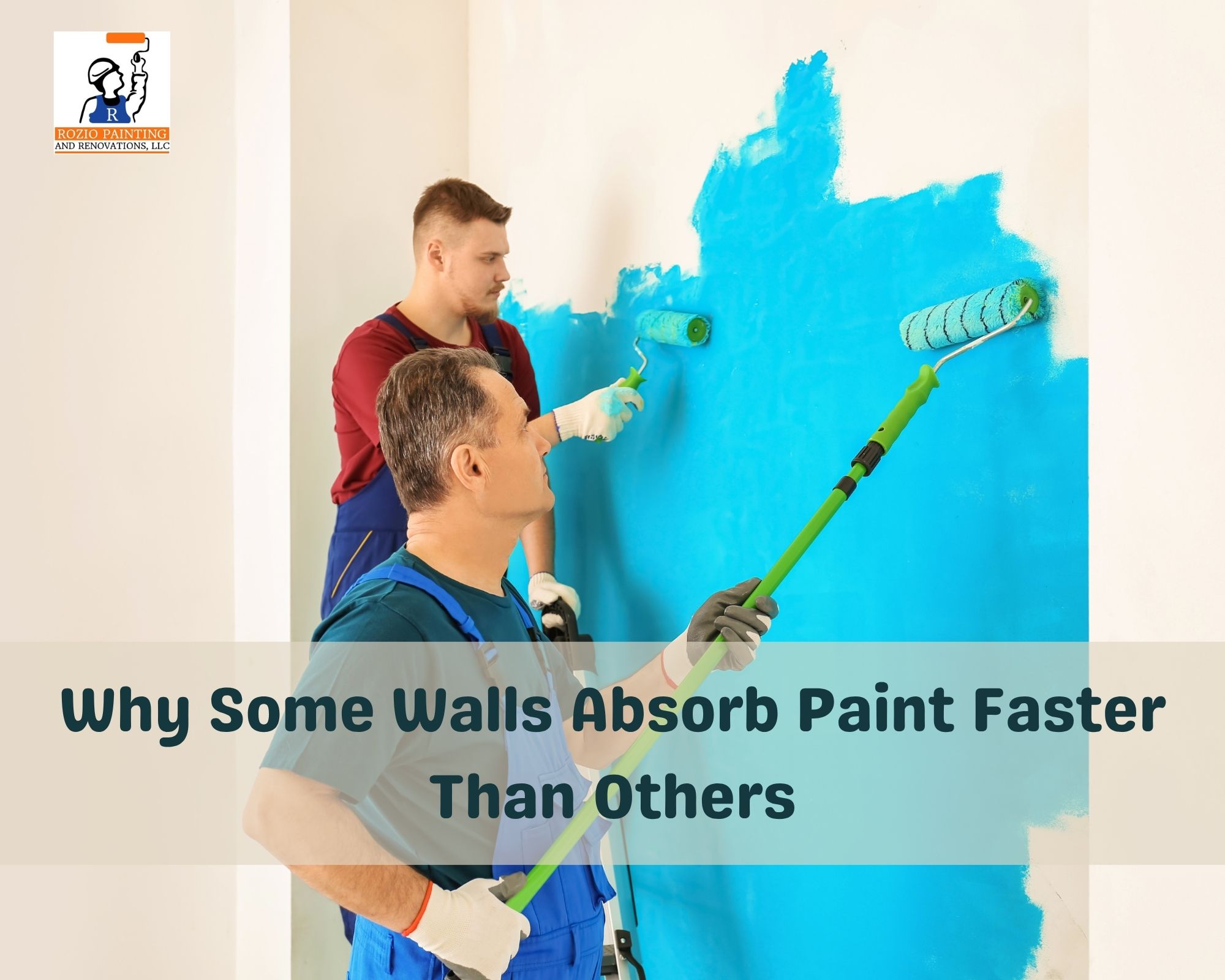
When painting a room, you may notice that some walls seem to soak up paint quickly while others remain covered with the first coat. This can make the paint look uneven and may leave you wondering whether something went wrong during the application.
The difference is usually related to the condition and type of the wall. Porosity, previous paint, repairs, drywall, plaster, and even how the surface was prepared can all affect how much paint a wall absorbs. For homeowners considering interior painting in Farmington, CT, understanding these factors can help ensure the paint is applied properly and produces a smoother, more consistent finish.
Some walls are naturally more porous than others. A porous surface has small spaces that allow paint to penetrate into the material instead of staying mainly on the surface. New drywall, unfinished plaster, bare wood, and certain patched areas can be especially absorbent. When paint is applied, these areas may appear to "drink" the paint. Less porous walls, particularly those that have already been properly painted and sealed, generally require less paint because the coating stays closer to the surface.
New drywall is one of the most common examples of a surface that absorbs paint unevenly. The drywall paper and joint compound can have different levels of porosity. This can cause certain areas to absorb paint faster than others. Seams, corners, and repaired sections may also look different from the rest of the wall after the first coat. Using an appropriate drywall primer before painting helps create a more uniform surface and can reduce differences in absorption.
Wall repairs can also create uneven paint absorption. If holes, cracks, or dents have been filled with joint compound or another patching material, the repaired area may absorb paint differently from the surrounding painted surface. Even when the repair looks smooth, its texture and porosity can differ from the original wall. Priming repaired sections before applying the final paint can help reduce noticeable differences in color and sheen.
A previously painted wall usually absorbs less paint than a bare surface. However, not every painted wall has the same surface condition. Older paint may have become worn, chalky, or damaged over time. Some areas may also have been painted several times while others have received repairs or touch-ups. Differences in the existing coating can cause paint to spread and dry differently across the wall.
Proper preparation is one of the most important steps in achieving an even finish. Dust, grease, loose paint, sanding residue, and other contaminants can affect how the new coating adheres to the wall. Before painting, the surface should be cleaned and repaired as needed. Glossy areas may need light sanding, while porous or repaired surfaces may require primer. Skipping preparation can result in uneven coverage and may require additional coats.
If a wall absorbs paint quickly, the first coat may not provide the coverage you expect. The color may look lighter or patchier in some areas. This does not necessarily mean that the paint is defective. The surface underneath may simply be absorbing more of the coating. A primer can help seal porous surfaces, while a second finish coat can provide more consistent color and sheen.
Yes. Different paints can behave differently depending on their formulation, finish, and intended use. However, the condition of the wall remains an important factor. For example, applying a finish coat directly to a highly porous surface without proper preparation can lead to uneven coverage regardless of the quality of the paint. Choosing the right primer and preparing the wall correctly can make the painting process much more predictable.
Professional painters usually inspect the wall before applying the final coating. They look for patched areas, bare surfaces, stains, cracks, old coatings, and differences in texture. Depending on the condition, they may clean, sand, repair, spot-prime, or apply a full primer coat before painting. This preparation helps the finish coat spread more evenly and reduces the chance of noticeable differences after the paint dries.
Some walls absorb paint faster because their surfaces have different levels of porosity and preparation. New drywall, plaster, repaired areas, bare surfaces, and older coatings can all affect how paint behaves. If you want a consistent finish, don't focus only on the paint color. Preparing the surface properly is just as important. Cleaning, repairing, sanding, and using the right primer can help create a smoother and more uniform result. When walls have different surface conditions, taking the time to prepare them correctly can make a noticeable difference in the finished appearance.
Highly porous surfaces, such as new drywall, plaster, or repaired areas, can absorb paint quickly. These surfaces often benefit from primer before the finish coat.
Not always. If the existing paint is in good condition and the surface is uniform, primer may not be necessary. However, bare, repaired, stained, or highly porous areas may need priming.
Patch materials can have a different texture and porosity than the surrounding wall. As a result, they may absorb paint differently and become visible after the paint dries.
An additional coat can improve coverage, but it may not completely solve the problem if the underlying surface is absorbing paint unevenly. Proper preparation and priming are often more effective.
Start with a clean, smooth surface. Repair damaged areas, sand where necessary, remove dust, and use an appropriate primer on porous or repaired surfaces before applying the finish paint.