


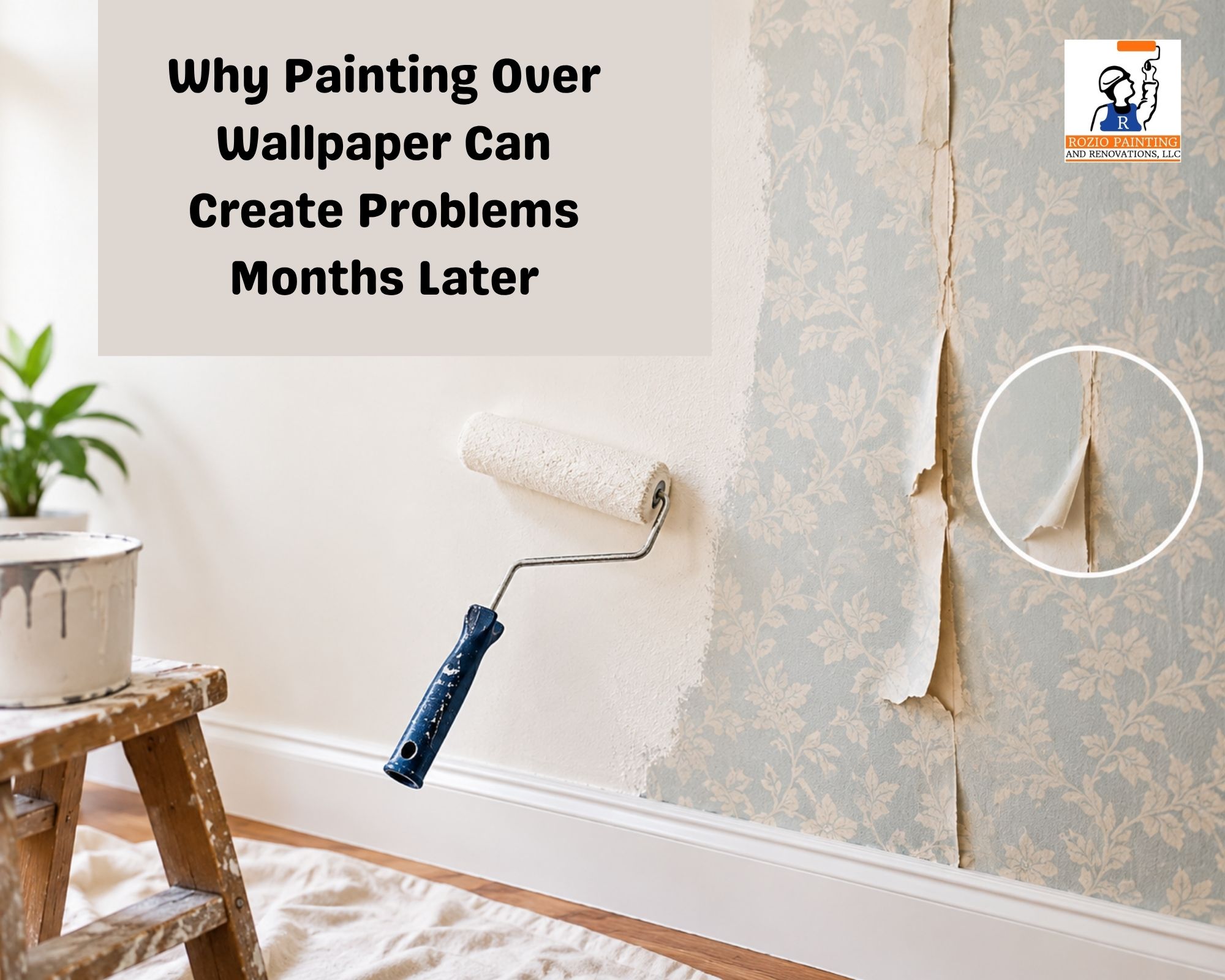
Painting over wallpaper may seem like a quick and easy way to refresh a room. It saves the time and effort of removing old wallpaper, preparing the walls, and repairing the surface. At first, the finished wall may look smooth and clean, but problems can appear several weeks or months later.
For homeowners planning a renovation, professional wallpaper removal services in CT can help prepare walls properly, prevent costly repairs, and achieve a smooth, long-lasting paint finish.
One of the most common problems is wallpaper seams becoming visible through the paint. Wallpaper edges can loosen over time, especially when exposed to moisture or temperature changes. When paint is applied over these areas, it may not hold the edges in place.
As the adhesive weakens, seams may lift or create raised lines on the wall. These imperfections can become more noticeable as the paint dries and the wall experiences normal changes in humidity.
Moisture is a major reason painting over wallpaper can lead to problems. Paint, particularly water-based paint, can affect the existing wallpaper adhesive. If the adhesive begins to soften, the wallpaper may separate from the wall.
At first, the surface might look fine. Months later, homeowners may notice bubbles, peeling paint, or loose sections of wallpaper.
Bathrooms, kitchens, laundry rooms, and other areas with high humidity are especially vulnerable. Proper ventilation and checking the wall for moisture problems before painting are important steps.
Wallpaper can have textures, patterns, and small surface imperfections that remain visible after painting. Even when several coats of paint are applied, the original pattern or texture may still show through.
Some wallpaper also has a glossy or vinyl coating that makes it difficult for paint to adhere properly. Without the correct preparation and primer, the paint may develop an uneven finish or begin to chip.
Removing the wallpaper and preparing the wall properly often provides a better foundation for a smooth, professional-looking result.
Old wallpaper can hide cracks, stains, loose plaster, and other wall problems. Painting directly over it covers the surface without addressing what is happening underneath.
If the wall has existing moisture damage or deteriorating plaster, those issues may continue to develop. Over time, the paint may discolor, crack, or peel along with the wallpaper.
Inspecting the wall before starting a painting project helps identify repairs that should be completed first.
Painting over wallpaper may reduce the work required initially, but it can make future wallpaper removal more difficult. Once paint has bonded to the wallpaper, removing the combined layers can require additional scraping, soaking, and surface repair.
Homeowners may eventually need to pay for wallpaper removal, drywall repairs, sanding, priming, and repainting. What seemed like a time-saving shortcut can therefore turn into a larger renovation project.
In most cases, removing old wallpaper before painting is the better long-term option. It allows the wall to be inspected, cleaned, repaired, and properly prepared before applying new paint.
However, removal is not always necessary. If the wallpaper is firmly attached, smooth, dry, and in good condition, a professional may determine that painting over it is suitable. Using the right primer and preparation method is essential.
For homeowners planning a renovation, wallpaper removal services in Fairfield, CT can help prepare walls for painting, prevent future peeling, and achieve a smooth, long-lasting finish.
Painting over wallpaper can provide an immediate improvement, but the results may not last if the surface is not properly prepared. Loose seams, moisture, poor paint adhesion, and hidden wall damage can all lead to problems months after the project is finished.
Taking the time to inspect the wallpaper and prepare the wall correctly can help homeowners avoid repeat work and enjoy a more durable finish. A little extra preparation at the beginning can save both time and money later.
1. Can you paint over wallpaper without removing it?
Yes, painting over wallpaper is possible if it is firmly attached, dry, and in good condition. Proper cleaning, seam repairs, and a suitable primer are important.
2. Why does paint bubble over wallpaper?
Paint can contribute to bubbling when moisture softens the wallpaper adhesive or when air is trapped beneath loose wallpaper. Existing wall moisture can also cause this problem.
3. How long does it take for painted wallpaper to start peeling?
There is no fixed timeline. Peeling may appear within days or weeks, or it may take several months, depending on the wallpaper condition, adhesive, paint, humidity, and preparation.
4. Should I use primer before painting over wallpaper?
Yes. A suitable primer helps improve adhesion and can reduce the risk of paint-related problems. The right product depends on the wallpaper material and its condition.
5. Is removing wallpaper better than painting over it?
Usually, yes. Removing wallpaper makes it easier to inspect and repair the wall, creating a better surface for painting. However, firmly attached wallpaper in good condition may sometimes be painted over successfully.
6. Can painting over wallpaper damage drywall?
Painting itself does not necessarily damage drywall, but moisture from paint or later removal attempts can weaken wallpaper adhesive and damage the drywall paper. Proper assessment and preparation help reduce this risk.